

How to Organize a Golf Trip for 16+ People: A Trip Captain's Checklist
Organizing a golf trip for 16 or more people works best broken into four separate systems, not one big to-do list: attendance and roster, tee time and pairing logistics, communication, and expenses. Trying to manage all four through one group text is where large trips fall apart.
A trip for four guys is a phone call and a shared calendar invite. A trip for 16, 24, or 32 is a different category of problem entirely. More moving pieces, more people who need reminders, more chances for someone to show up not knowing which course they're playing that day. The good news: it's a logistics problem, not a people problem, and logistics problems have systems that solve them.
Why Big Trips Break Down
Golf travel is at a genuine high point — more than 12 million Americans travel specifically to play golf each year, up 49% compared to pre-pandemic levels, according to National Golf Foundation data. Buddy trips, in particular, are a huge share of that growth. But the same data points to why bigger trips need more structure: golf trips concentrate spend, time, and coordination into a few intense days, and that concentration is exactly what breaks a group text.
At four people, everyone sees every message. At twenty, half the group mutes the thread by day two and misses the tee time change. The chat that worked fine for a foursome becomes the exact reason people show up confused for a 24-person trip. As overall participation in golf keeps growing, more groups are running into this exact problem for the first time.
The Four Systems a Big Trip Needs
1. Roster and Attendance
Know exactly who's confirmed, who's tentative, and who hasn't responded, at all times, not just at the deadline. For 16+ people, chasing down the last three "maybes" a week before the trip is a different job than chasing down one. Track it continuously instead of doing a headcount push right before you have to book.
2. Tee Times and Pairings
Sixteen or more players rarely play as one big group. You're usually running multiple tee times, multiple foursomes, and possibly different formats for different groups on different days. Decide pairings ahead of time and communicate them clearly — don't leave it to whoever shows up first to sort out on the first tee.
3. Communication
A single group text works until it doesn't, usually right around 10-12 people. Beyond that, you need a way to send trip-wide updates that everyone sees — tee time changes, weather calls, dinner plans — without it getting buried under side conversations.
4. Expenses
Green fees, carts, lodging, meals, side games, across several days and often multiple payment methods. This is the system most likely to cause actual friction if it's handled loosely, since money problems linger long after the trip ends.
A 4-person trip survives on good vibes and a group chat. A 24-person trip needs actual systems, or the good vibes are what gets spent fixing avoidable mistakes.
Building the Trip: A Practical Sequence
Lock the core details first. Dates, destination, and rough budget, before you invite anyone beyond your core group. Vague invites produce vague commitments.
Send one clear invite, then track responses actively. Don't wait for people to volunteer their status. Follow up directly with anyone who hasn't responded within a set window.
Set pairings and tee times once the roster is close to final. Trying to set pairings while the roster is still shifting means redoing the work more than once.
Establish the expense system on day one, not after the first bill comes in. Whoever pays for the first round of cart fees should already know how it's being tracked. If your group hasn't nailed this down before, splitting golf trip expenses without a napkin is worth reading before your next trip.
Build in one shared source of truth. Whether that's an app or a shared doc, everyone in the group should be able to check tee times, pairings, and balances without texting the organizer directly.
What Changes Above 16 Players
Use structured tools when your trip has:
- More than one tee time or course across the trip
- Multiple match formats running for different sub-groups
- A budget large enough that expense disputes would matter
A group text and shared calendar are still fine when:
- You're organizing 4 to 8 people who already communicate well
- Everyone's playing the same round together, same tee time, same format
- Expenses are simple enough to split evenly without much tracking
The 16+ threshold isn't a hard rule — it's the point where most groups start feeling the coordination cost of not having a system.
Ready to Run the Whole Trip in One Place?
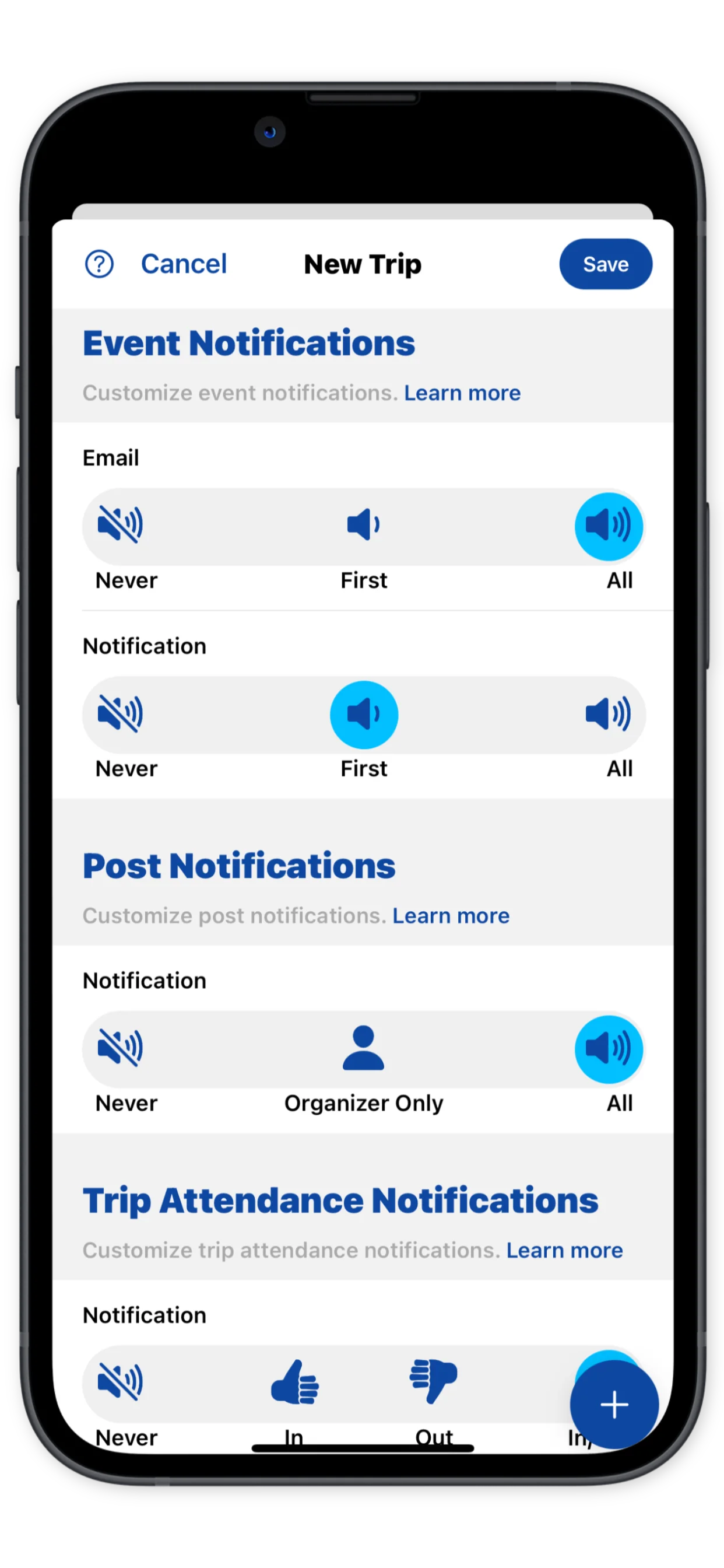
Double Ace Golf's trip feature manages tee times, pairings, invitations, attendance, and expenses for trips of any size, so the coordination doesn't fall entirely on one person's phone. You can also schedule every round of the trip as its own event, so pairings and tee times stay organized day to day.
Need to fill out the roster first? See our Trip Captain's guide to recruiting golf partners, or start with the golf trip planning guide for the fundamentals before you scale up to a bigger group.
Frequently Asked Questions
How do I organize a golf trip for a large group?
Break the trip into four separate systems: roster and attendance, tee times and pairings, communication, and expenses, rather than managing everything through one group text.
At what group size does a golf trip need more structure?
Most Trip Captains feel the strain around 12 to 16 people, when a single group text stops reaching everyone reliably.
How far in advance should a large golf trip be planned?
Lock dates, destination, and budget as early as possible, ideally several months out for trips involving travel and lodging.
How do you handle tee times and pairings for 16 or more golfers?
Set pairings and tee times once the roster is close to final and communicate them clearly ahead of the trip rather than sorting them out on-site.
What's the best way to communicate trip updates to a large group?
Use a tool that sends updates to the entire group at once and keeps them visible, rather than relying on a single group text thread.
Can an app handle golf trip planning for a large group?
Yes. Double Ace Golf's trip feature manages attendance, communication, tee times, match setups, and expense splitting for trips of any size.
Download Double Ace Golf and plan your next trip without the group-text chaos.